Shirataki Noodles with Tarako (Masago-ae)
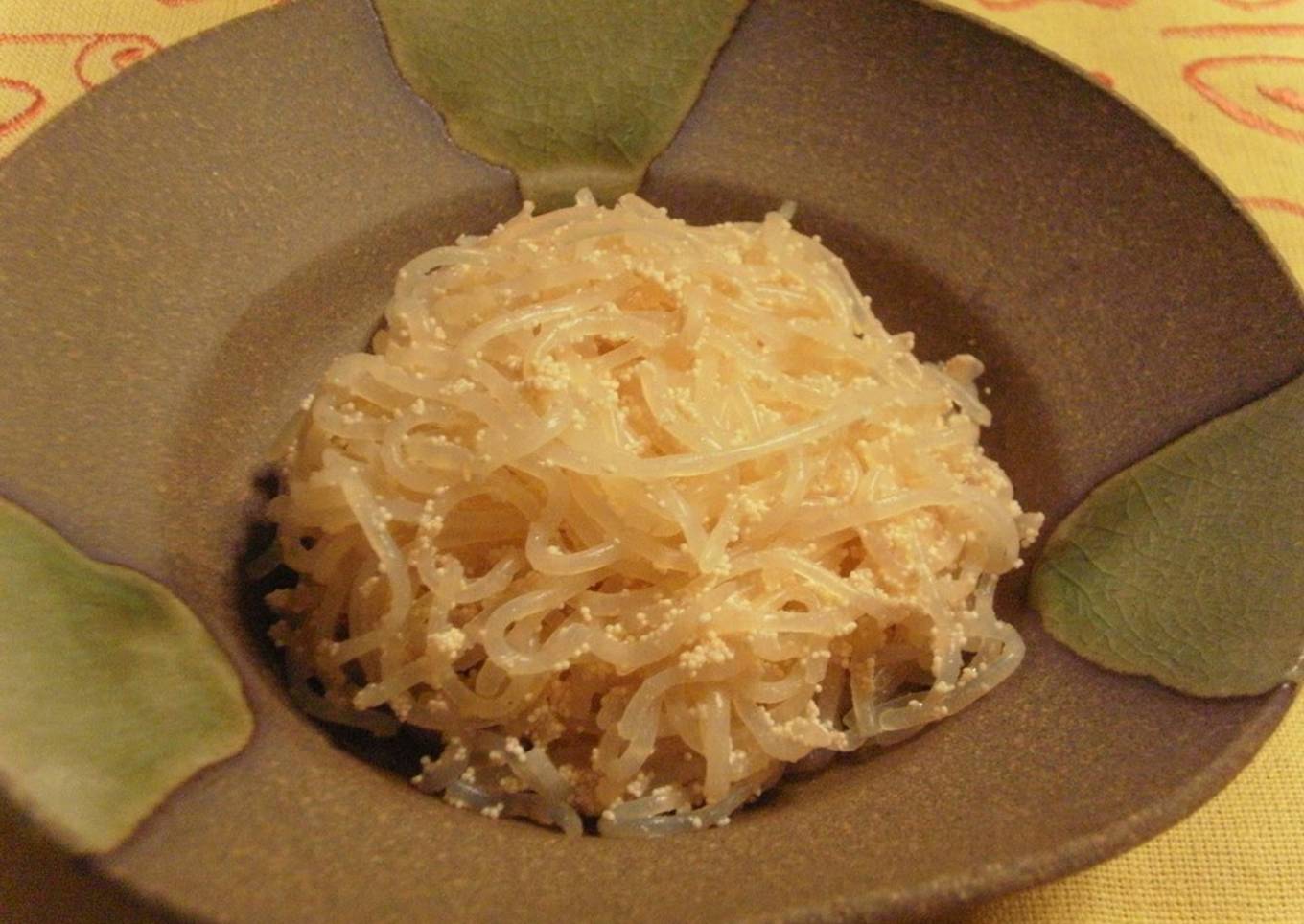
Hello everybody, it's Brad, welcome to my recipe page. Today, I will show you a way to prepare a distinctive dish, Shirataki Noodles with Tarako (Masago-ae). One of my favorites. This time, I'm gonna make it a little bit unique. This will be really delicious.
Shirataki Noodles with Tarako (Masago-ae) is one of the most well liked of current trending meals on earth. It's simple, it's quick, it tastes yummy. It's enjoyed by millions every day. Shirataki Noodles with Tarako (Masago-ae) is something which I've loved my entire life. They are nice and they look fantastic.
Many things affect the quality of taste from Shirataki Noodles with Tarako (Masago-ae), starting from the type of ingredients, then the selection of fresh ingredients, the ability to cut dishes to how to make and serve them. Don't worry if you want to prepare Shirataki Noodles with Tarako (Masago-ae) delicious at home, because if you already know the trick then this dish can be used as an extraordinary special treat.
As for the number of servings that can be served to make Shirataki Noodles with Tarako (Masago-ae) is 4 servings. So make sure this portion is enough to serve for yourself and your beloved family.
To begin with this particular recipe, we have to first prepare a few components. You can cook Shirataki Noodles with Tarako (Masago-ae) using 6 ingredients and 6 steps. Here is how you can achieve that.
I've always used sake to loosen up tarako. They go together so well.
The tarako is salty so you don't need any additional salt. The sake and the soy sauce are all the flavoring ingredients you need. This really boosts your appetite. The tarako sauce produced in Step 3 can be used for tarako spaghetti too. For 4 servings. Recipe by Hoshirun
Ingredients and spices that need to be Get to make Shirataki Noodles with Tarako (Masago-ae):
- 2 bags Shirataki noodles
- 1 pair Tarako (salt-cured cod or pollack roe)
- 3 tbsp ● Sake
- 1 tsp ● Soy sauce
- 2 grams ● Dashi stock granules
- 1/2 tsp ● Chicken soup stock granules
Instructions to make to make Shirataki Noodles with Tarako (Masago-ae)
- Wash the shirataki noodles in water, and cut 3 times. (I used a pre-treated kind of shirataki, but if you have regular shirataki boil it and rinse under water to get rid of the odor.)

- Drain the shirataki very well.

- Cut through the membrane of the tarako lengthwise. Add the ● ingredients, and mix them well with the insides of the tarako until you have a runny mixture.

- Put the shirataki noodles in a frying pan, and stir fry until there's no moisture left on then. When they are plump and rubbery add a little oil and stir-fry some more.

- Add the tarako sauce from Step 3, and stir fry until there's no moisture left. It will look nicer if you take out the membrane.

- Transfer to a dark colored serving dish. Since the tarako look like grains of sand, this dish is also called shirataki mixed with masago ("real sand" in Japanese) or masago-ae.

As your experience and self-confidence expands, you will certainly find that you have more natural control over your diet as well as adapt your diet to your individual preferences with time. Whether you intend to serve a recipe that uses fewer or even more active ingredients or is a little essentially hot, you can make basic adjustments to attain this goal. To put it simply, begin making your recipes on time. When it comes to basic cooking abilities for newbies you don't need to learn them but just if you grasp some easy cooking methods.
This isn't a full overview to fast as well as simple lunch recipes yet its excellent food for thought. Hopefully this will obtain your creative juices streaming so you can prepare scrumptious meals for your family without doing a lot of square meals on your journey.
So that is going to wrap it up for this special food How to Make Homemade Shirataki Noodles with Tarako (Masago-ae). Thank you very much for reading. I am confident you can make this at home. There's gonna be more interesting food in home recipes coming up. Don't forget to bookmark this page on your browser, and share it to your family, friends and colleague. Thanks again for reading. Go on get cooking!


Comments
Post a Comment